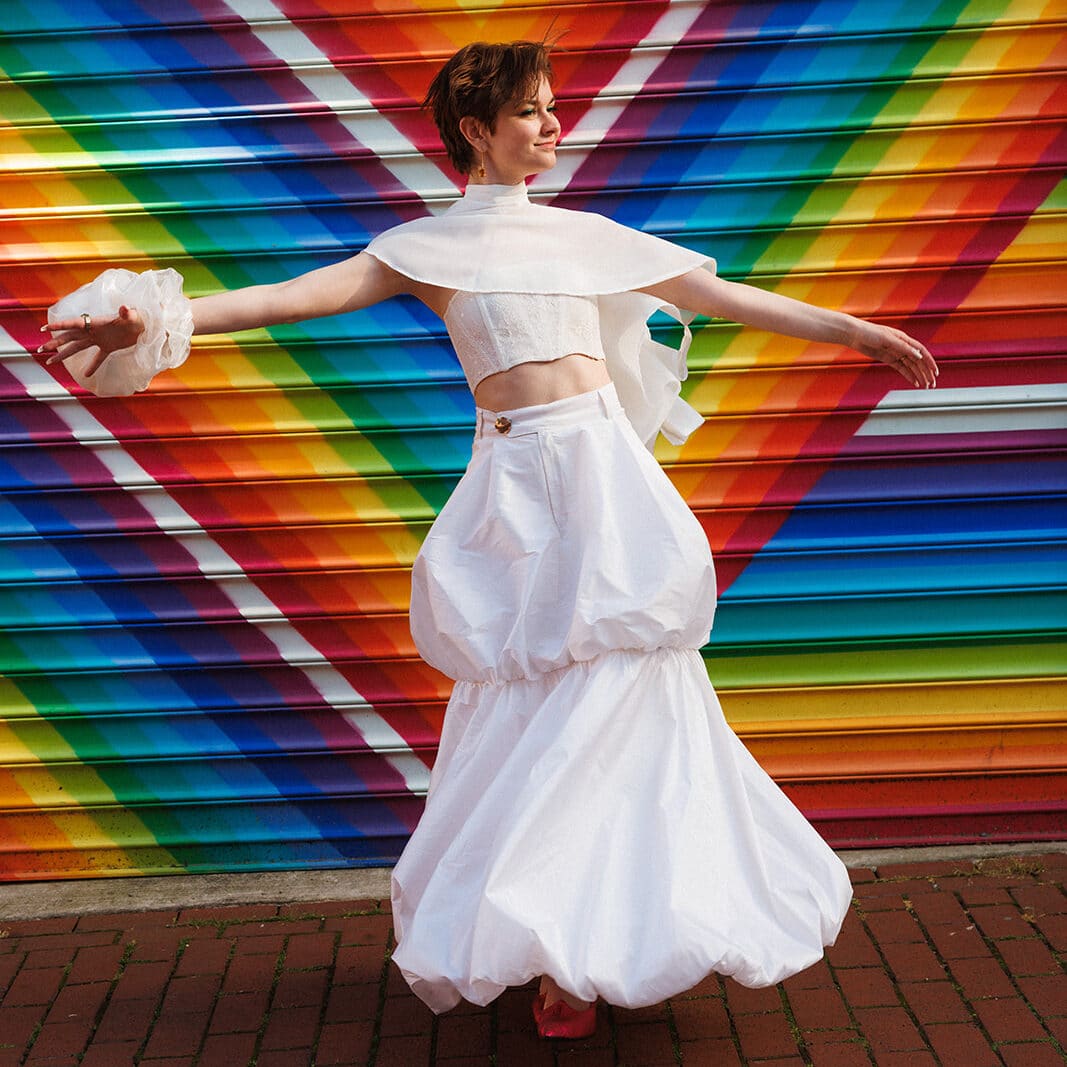
Why the getting ready outfit should be prioritized and built around you and how the wedding day changes when it is.

Most people think a good queer wedding look comes down to the fashion, the actual outfit itself. It doesn’t.

It comes down to whether you recognize yourself in it. That’s the difference, and makes all the difference in the world for queer folks. And it’s why I approach styling the way I do.

This week, I’m walking you through a recent shoot I had published — one look at a time. Not just what it looked like. But why it worked. And how it was built.

Because the outcome is one thing, but the thinking behind it is what actually changes everything.

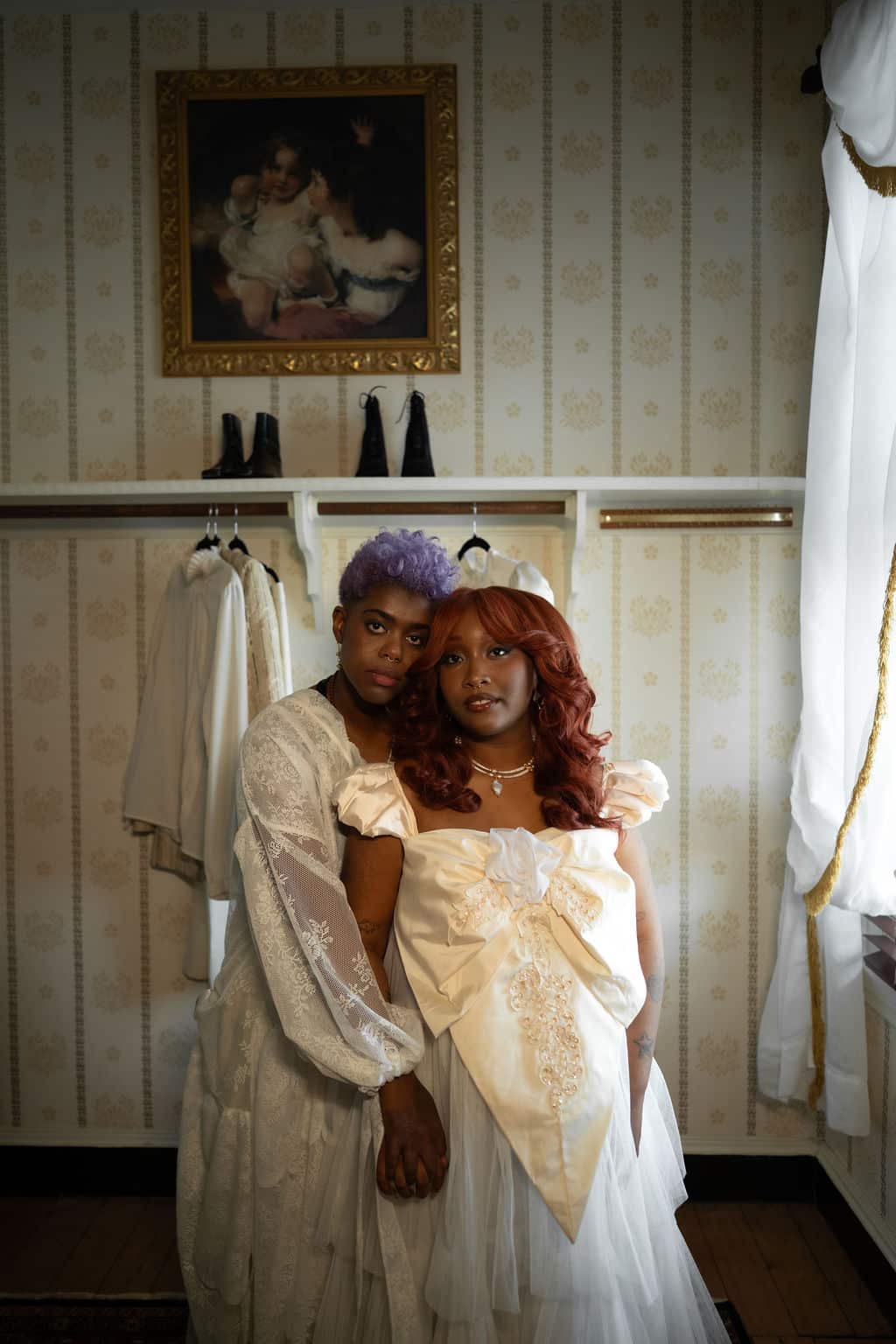
Girl in white dress, vintage setting.
Jasmine Kerbel Photography

The outcome

A one-of-a-kind dress built from antique, repurposed fabrics.

Paired with sculptural jewelry — vintage-feeling red carpet earrings or handmade work from a queer Indigenous designer. Finished with soft 80s-inspired curls and red ballet slippers.

The wedding look reads romantic, but not traditional. Intentional, but not overworked.

The part most people miss

This wedding look works because nothing is trying too hard to be “bridal.” It’s referencing something older. More personal. Less performative.

And that’s what makes it land.

Elegant dress with floral embellishments.
Jasmine Kerbel Photography

The Build

The getting ready look is the most individual moment of the day. Before the audience, before the performance. It’s just you — and how you see yourself.

In a shoot centered on radical self-expression, that moment couldn’t be generic. So, we prioritized one-of-a-kind garments.

For Lyric, that meant this dress, made from antique, repurposed fabrics from By Liv Handmade in Brooklyn. (We rented her, the Gigi dress, and she happens to still be available in the shop if you’re interested).

Layers of vintage sheer tulle and antique textiles created something that felt both: photographable and slightly… off-limits.

Not inappropriate. Just not entirely explainable. That tension matters. Because most “getting ready” looks are designed to be consumed.

This one wasn’t. This wedding look was designed to be inhabited.

Close-up of a pearl necklace
Jasmine Kerbel Photography

We wanted Pearls

But not the kind that reference a tradition most people don’t get access to. Because a lot of queer people don’t have the experience of a supportive grandmother handing something down on their wedding day.

So instead, we sourced a pearl necklace from House of Sutai, a queer Indigenous brand. Irregular pearls. Slightly different. Still classic — just not obedient to it.

Red shoes with white tulle dress
Jasmine Kerbel Photography

And the Shoes

The getting ready wedding look wouldn’t be the same without ruby red ballet slippers. A quiet nod, if you catch it.

Woman with red curly hair, elegant dress
Jasmine Kerbel Photography

Most people assume…

that vintage is either: something you wear as-is or something you can’t access. That’s not true. There’s always a third option. Repurpose it. Rework it.

Shift it just enough that it goes from something old to something you.

Person in white dress and red shoes
Jasmine Kerbel Photography

You don’t have to choose between…

something meaningful and something that actually works for the moment. You also don’t have to rely on what the wedding industry tells you is “necessary” just to feel finished.

There are other ways to arrive at a look. More specific ones. More accurate ones. More you-worthy ones.

This is the kind of queer fashion styling work I do with clients — we’ll get into more of it in the next look (Chantelle’s getting ready look).

Two women reading books together.
Jasmine Kerbel Photography

Follow the creative team on Insta

By Liv Handmade

House of Sutai

Creative Team:
Planning/Design/Producer: Aprill Gordon @Tulleandtinsel_Events
Fashion Stylist/Creative Director: Kati Kons @portraitofabrideonfire
Stylist Assistant: Olivia Cantrell @ocantrell_

Photography: Jasmine Kerbel, @jasminekerbel
Lighting Assistant: Logan Schooley, @logansphotog

Content Creation: Liz Cipriani, @contentbyliz_
Floral Design: Lee Matalone, @fieldfloral
Venue: Strawberry Hill Petersburg @strawberryhillpetersburg
Makeup & Hair Stylist: Carla Pressley, @Carlapressleyhairmakeup
Stationery Design: Patricia Heffner, @ohelevenstudio

Rentals: Rent-E-Quip, @rentequipva / DC Rental, @Ceventrentals
Cake Designer: Justin Ross, @JC_desserts
Couple: Lyric and Chantelle @lyric_simms @ceepeekay

Published in @greenweddingshoes

Gender-neutral fashion isn’t a trend. It’s a language. A way queer folks express fluidity, selfhood, and power without subscribing to outdated binaries. As a stylist for LGBTQ+ people, including public figures and everyday icons alike, I’ve noticed patterns in the way gender-neutral fashion is showing up across our community.

Here are six recurring hallmarks of androgynous style in 2025—what’s rising, what’s resonating, and how it’s being styled with depth and intention.

1. Patterned Suits, Matching Sets, & Monochrome Mastery

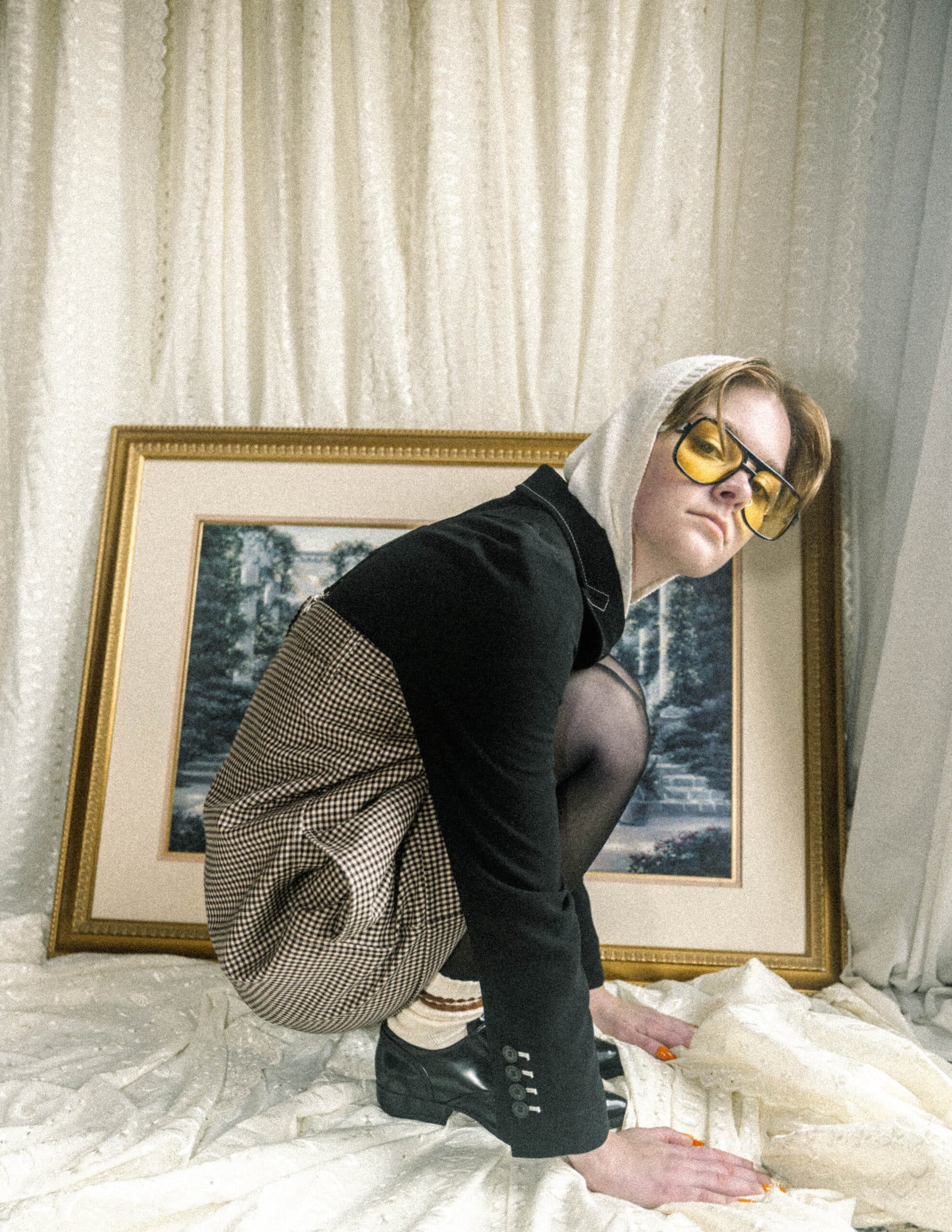
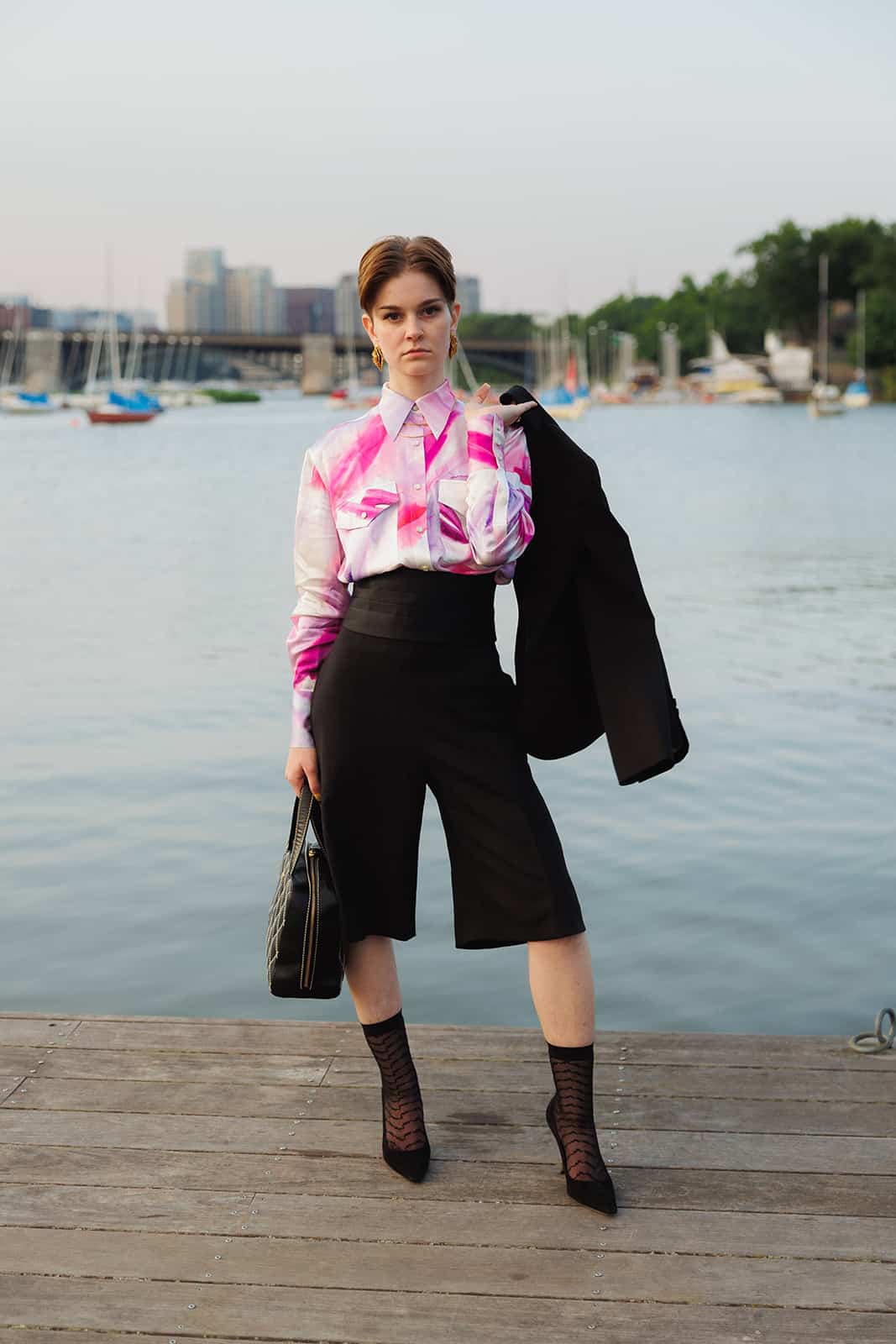
This isn’t your basic black tux. Suits have embellished flair or patterned pizzaz to them in a way that traditional tuxes do not, like this Derek Lam blazer and pants suit set. Queer fashion is all about expressive tailoring—think full monochrome sets in three shades of the same color, and just as importantly, three textures for visual depth. A tonal, tactile outfit says: I know who I am and I came dressed like it.

2. Statement Necks: Collars, Bows & Silk Ties

Neckwear is having a queer awakening. Obnoxious collars, pussy bows, silk blouses with built-in ties—your neck becomes the focal point, not just a place to rest a necklace. It’s playful, dramatic, and totally self-expressive.

3. Longline Blazers: The Queer Dress-Code Hybrid

Longer-than-usual jackets (“longline”), like this emerald long leather jacket, blend the power of tailoring with the flow of a dress. They offer structure and softness—perfect for those who don’t feel at home in traditional formalwear. The perfect in-between for someone who doesn’t know if a suit or a dress represents them better.

4. Wide-Leg Pants: Queer, Not Corporate

Skinny pants? We don’t even know her. In queer style right now, it’s all about wide-leg everything—wool, cargo, pleated, flared. It’s not just trendy, it’s liberating. More space, more movement, more power. Try these wide-leg pin-tuck pants from Universal Standard.

5. Interesting Vests & Sleeveless Statements

Whether it’s a vest layered over a blouse or a sleeveless shirt worn solo, there’s something deeply gender-expansive about these silhouettes. They say: I’m not dressing for anyone’s expectations but my own, like this longline waistcoat.

6. Low Black Heeled Boots

Arguably the most iconic gender-neutral shoe out there, something like the Minori booties by Emme Parsons. They elongate the leg, add a dash of edge, and pair with literally everything. Loafers had their moment—right now, we’re in our heeled boot era.

Why This Matters for Gender-Neutral Fashion

Queer fashion is about more than “androgyny.” It’s about visibility. Identity. Autonomy. Whether you’re exploring personal style or planning a wedding look, these elements show up again and again because they work. They make people feel confident, seen, and a different category (if a category at all) of people than the rest of the norm.

Want to Dress Like This, But Don’t Know Where to Start?

As one of the only dedicated fashion stylists for the queer community, I’ve got you covered on resources and services alike. If you’ve got more money than time, I’ve got you. My Style on Retainer program is designed for queer folks who want long-term personal styling rooted in identity, not industry standards. I’ve got four spots left—let’s build a wardrobe that finally feels like home. Maybe you’re getting married or just have a one-off event? Fill out this inquiry form to work with me to find the look that feels just right for you and that special occasion. If you have an event coming up and can’t quite afford the 1-on-1 work this time, check out the Queer Wedding Guest Lookbook for a comprehensive go-to place to find your next formal attire, without all the ads, spam, and fast fashion BS.

Too many bridal shops are still stuck in the binary—and queer folks are left out of the equation. If your idea of a dream wedding outfit doesn’t include a giant dress or gendered suit, the search can feel impossible.

As a queer wedding fashion stylist, I’m here to change that. I’ve worked with countless LGBTQ+ clients who want to feel powerful, affirmed, and seen in what they wear—and the problem isn’t them. It’s the lack of access to designers doing it differently.

So I made a short list.

Here are 12 non-traditional wedding designers or brands who get it, in different price brackets, so you can find options that reflect your identity and your budget:

High-End ($5,000+)

These designers are known for custom, couture-level wedding fashion. Perfect for folks who want something completely one-of-a-kind.

Mid-Range ($2,000–$5,000)

Think elevated Ready To Wear—expressive and high quality without the couture price tag.

More Accessible ($2,000 and under)

Small brands doing big things. These labels offer non-traditional pieces with edge, personality, and price points that feel more doable.

Why This List Exists

Let’s be real: there’s no standard pipeline for finding queer-affirming wedding fashion. It’s DIY, emotionally loaded, and often expensive. But it doesn’t have to be.

These designers are changing the game—but they rely on us to keep doing it.
So if any of these brands resonate with you, first, follow them, second, share their work, and third, support them monetarily if you can.

Visibility is currency. Let’s give them the love they deserve.

Want Personalized Help?

If you’re overwhelmed by options or just want someone who gets it to handle it for you, check out my Wedding Fashion Styling program. We’ll build a look that feels like you—not who you were told to be.

There’s a moment when you stop dressing for the role you’re in and start dressing for the future you’re building. And that moment changes everything.

This shift isn’t about faking it, it’s about alignment. It’s about dressing in ways that reflect your aspirations, your ambitions, and your authentic self—especially if that self hasn’t always been affirmed in professional spaces.

The Psychology of Style: What Is Enclothed Cognition?

This transformation is rooted in a psychological phenomenon called enclothed cognition—the idea that what you wear influences the way you think, feel, and show up.
Your posture is better.
Your confidence increases.
Your behavior has an extra ounce of energy.
You start performing as the version of you you’ve been working toward.

And people start to notice.

Style as a Tool for Visibility

For queer professionals, entrepreneurs, and creative leaders, dressing for the job you want isn’t about conforming to outdated norms. It’s about reclaiming visibility, sovereignty, and safety. It’s about stepping into a visual identity that reflects your values, your brilliance, and your next chapter.

And that’s what my Style on Retainer program is all about.

Introducing: Style on Retainer

Style on Retainer is a long-term personal styling program that helps you develop a custom, aligned wardrobe to support how you want to lead, create, and move through the world.

We don’t microanalyze your every garment together like most personal stylists do, rather, we are strategizing how style can elevate you in your life on a macro level.

Whether you’re:

  • Building your own business
  • Dreaming of the C-suite
  • Or just tired of shrinking yourself into outdated professional dress codes,

This program is made for you.

You’re not just changing your clothes. You’re changing your life.

There are only 4 spots left in the Style on Retainer program, a transformational, one-on-one style experience for queer professionals and ambitious creatives ready to be seen, respected, and remembered.

Claim your seat now — because the version of you you’re becoming is already waiting.

When we talk about queer-inclusive wedding fashion, we need to get honest about what’s actually happening in bridal shops—and what’s completely missing. In short: If your shop doesn’t carry pants options beyond traditional gowns, you’re not queer inclusive. And no, having one feminine-leaning jumpsuit tucked in the back doesn’t count.

The Real Message You’re Sending to Queer Couples

When a bridal shop doesn’t offer suits, sets, or separates, basically any formal outfit with pants, it’s signaling one thing loud and clear: you’re only welcome here if you fit a certain kind of femininity. Specifically, the kind that aligns with mainstream, binary expectations of what a bride “should” look like.

That means for nonbinary folks, trans masc clients, or simply queer couples where both partners don’t identify with traditional bridal fashion, the message is: we’re not here for you. And that’s a massive problem.

So even if you think “I’ve served a lesbian bride before” let’s stop and ask a few questions: Did you consider that you were leaving money on the table when you left their partner high and dry? Did you know that they didn’t feel like that was a safe space for them even though they may have found a dress there? Did you even ask if they wanted to be called a bride?

Queer People Don’t Have the Luxury of Choice

Hetero couples? They can walk into a bridal shop or a suit shop and have a decent shot at finding something that works. This is because there are decades of pre-approved processes to finding a traditional suit and a traditional dress for your wedding. But queer people don’t have a designated space for wedding attire that reflects our identities. We’re piecing things together from wherever we can, often with resources and limited support.

And for bridal shop owners who are thinking, “But we do have a suit in-store!”—if it’s just a plain, basic, snow-white suit with zero personality, that is not an option. Queer people want expressive, fashion-forward wedding looks that reflect who they are. We’re not looking to dress like we’re headed to a corporate boardroom. We’re dressing for the queerest day of our lives! Moreover, we want optionality. Can you imagine the horror of a bride who walked into the wedding dress shop that only had one dress option for her? No, because that world doesn’t exist. Maybe for the plus-size or disabled folks it does. But certainly not for the fem, able-bodied, strait-sized girlies.

Designers, You’re Part of the Problem (and the Solution)

If you’re a wedding designer who says, “No one asks for pants—that’s why I don’t make them,” think again. People do want pants. What’s actually happening is that your contractual structures with bridal shops—like mandatory collection minimums—are making it near impossible for shops to carry the one expressive pantsuit from your line without investing in the whole collection. That mandatory minimum forces you to either make an entire collection of pants for a shop to buy or none at all.

That’s not inclusion. That’s systemic exclusion baked into the business model. And it’s time for it to change.

Yes, people want pants. I’d be out of a job if people didn’t want pants. I’m a fashion stylist for queer people solely because people want pants and bridal shops don’t have them and suit shops aren’t cute.

What Queer Couples Actually Need from the Wedding Fashion Industry

  • More pants. More suits. More sets. More separates. More expressive alternatives.
  • No gender assumptions baked into styling.
  • Designers who don’t gatekeep diverse options through outdated wholesale models.
  • Bridal shops that actually reflect the full spectrum of queer identity and expression.

Until then, queer people will continue skipping bridal shops entirely—and honestly, who can blame them?


Want to Wear Something That Feels Like You?

You’re not alone. If you’re looking for styling that centers your identity, affirms your expression, and makes you feel like your full self, work with a stylist who gets it.